Showing posts with label Rant. Show all posts

Saturday, February 24, 2024

Alright Ramblers, Let's Get Rambling (Rant Post, Hello 2024!)

 This isn't anything like my usual posts on here. But, seeing as I haven't posted anything in almost a year, I feel as if I have an opportunity to live up to this blog's name. So, what's on my mind?

I'm a really big fan of war games. More than that, I've always been a fan of the simulation aspect of war games. There's something about an attention to detail, not just in terms of mechanics but in the literal attention that is required from the player, that intrigues me. Sadly, like plenty other interests, I suffer from a severe lack of experience in the medium. I also suffer from a lack of skill. They're related, but not like you think.

A big issue of mine is "putting your money where your mouth is". Although I will spill buckets from my mouth about a given topic, or how much I enjoy thinking about that topic, or what I'd like to do within that medium, rarely do I actually live up to this standard. It's not a standard at all, really—simply describing who I am or would want to be—but it's nonetheless frustrating. Want to role-play as a particular character in an RPG? Good luck getting me to maintain the illusion for very long. How about sticking to a rule set or immersing yourself into a book / game / other medium? Better outcomes, in bursts, while suffering the same degradation in the long-term. Maybe you should write an adventure, or run a campaign, or start writing in a routine again! Doesn't that sound great?

...Yeah, about that...

My point is that it upsets me. I could spend centuries trying to rationalize why it happens or where it comes from (my ADHD diagnosis last year notwithstanding), but ultimately I don't think that matters. Who cares where it comes from? I've had to deal with this sort of thing since childhood, medication hasn't magically fixed the problem, and I've obviously not uncovered a good coping mechanism for it.

Yet in spite of these very real feelings, I continue to play war games. I still play RTS games, I still get upset at simulators, and still do I daydream about the various scenarios that I could craft, re-enact, or run for others. For myself as well, of course, but this feels like it falls into a bucket similar to writing: I have so many ideas, and so much more that I'd like to do with them.

Why do I bring any of this up? For one, because I can, but also because I've spent much of my waking time this year trying to not do nothing and still failing. I could go back several years and argue the same, but screw that noise. I bring this up because there's only one good reason.

I Want Control Change

Mucho Texto, enjoy some compensation
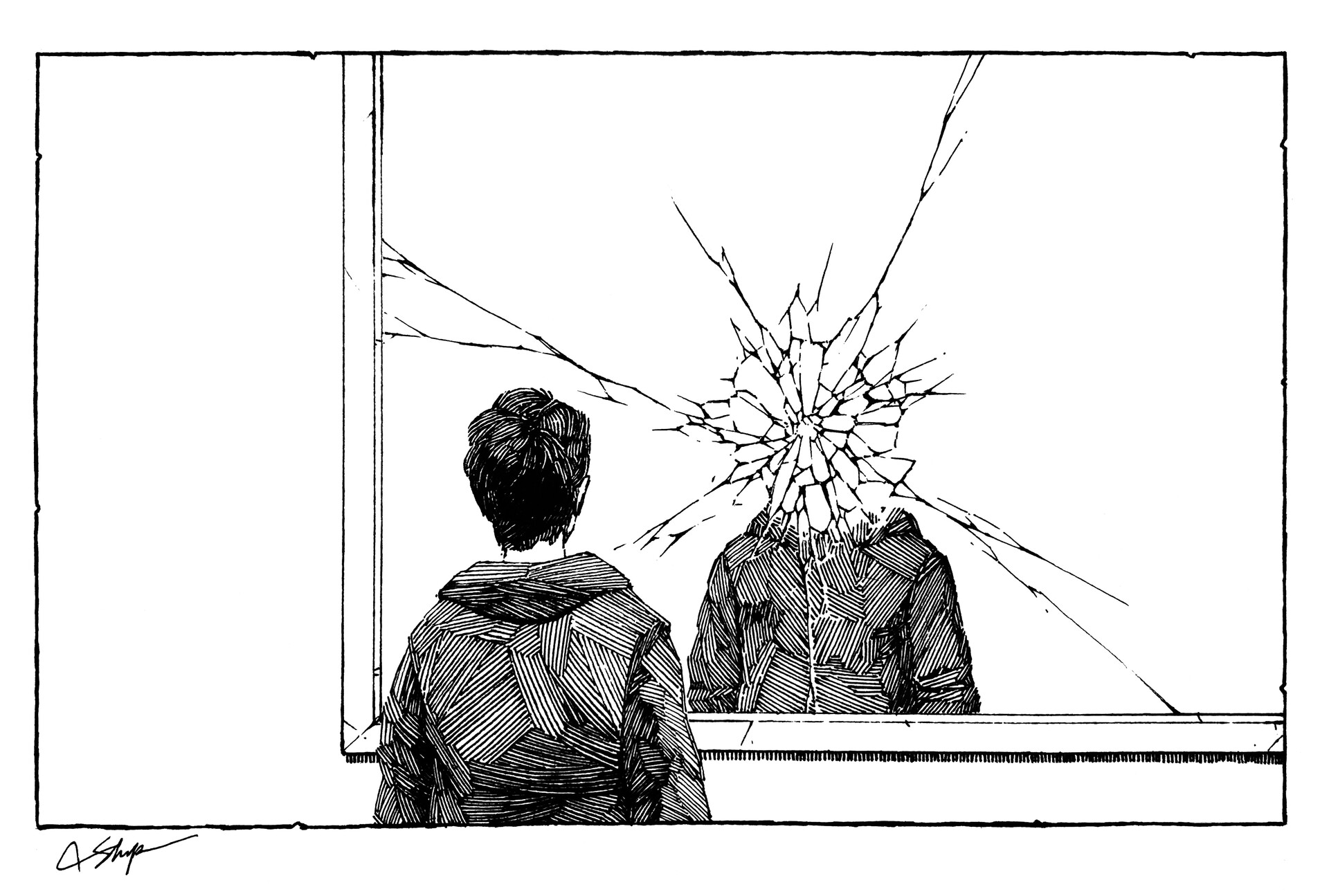
Art by Fishiibo


Now ain't that something we've all heard before? 

Change is a complicated topic. It isn't instantaneous, by which I mean that change is a gradual process, rather than an immediate shift in being, but it seems anytime I see change referred to it's spoken of as if it were immediate. Whether in fiction or non-fiction, I often find change described as both a catalyst and as the sum of its parts. What I mean by that is the "spark", the "moment of change", is always given the honor of being 'the moment things changed.' That past tense is very important to me. Why? Because it wasn't the moment of realization that made things different—it was the aftermath. 

I realize that this is ridiculous, unnecessarily pedantic, and even plain stupid, but hear me out for a second. "Change" as we often describe it, on an individual level, is nothing more than an idea. It is a thought, a light bulb, an 'aha!' which informs our actions. But it isn't the idea that actually changes things, is it? Outside of fiction, where a character's written thoughts directly affect their next move—you would drown if you took a shot for every work whose protagonist suddenly refused to defeat their villain in the final battle—'what we think' can hardly be rephrased as 'what we do'. Because that would be ridiculous, no? If judgements were carried out based on people's thoughts rather than their deeds, not on action but on word, mental word, wouldn't we be in a whole heap of shit? That means it isn't our thoughts that change the world, but our actions. I can think of all sorts of philanthropic shit to do, but if I never actually do any of it, I might as well have never brought it up.

Maybe I'm just nitpicking. I could be making a mountain out of a mole hill, one that only I care about, but what speaks to me is how appropriate it is. I have spent years now trying to formulate a schedule for myself, desperately trying to design and then follow a routine which works for me. I have tried planners, timers, and reward systems. I have tried setting breaks, crafting personalized deadlines, and daily goals. I have tried damn-well everything to what seems like zero effect...

...and yet I've changed, haven't I? In many ways I'm still the same, yes; I still hold many of the same struggles as years prior, but there are places where I have changed. There are differences in my thoughts and in my actions, things which may not have been intentional, but were nonetheless adopted in my struggle to achieve other goals. I never noticed these things they were a part of me.

Things change gradually, but is it always so secret?

I wonder what it feels like to be somebody else. In living their life, which decisions are easy or hard? What does it feel like to sit down and do something? To decide that there are things which must be done and tasks which must be met? What are their habits like? Are their routines always a conscious decision, a meticulously placed puzzle piece, or do they simply carry themselves to do it? Muscle memory is one thing, but what about the mind? Do they feel the draw to dissociate, to stare into space? Do they heed the call of the void?

I can ask these questions forever. I know because I have, in drafts far older than this one, which will probably never see the light of day. Part of why I would like to be different through posting this one is my desire to break this cycle. I want to put my money where my mouth is, I want to follow my own advice. Yet every time I try to crack down on these issue they sprout right back up, like dandelions. 

I know better than to desire "change". Change as an object, as a kind of particle, is useless. It's worse than useless, namely because change alone doesn't do anything. Change requires an intention. More than that, change requires a will behind it, because real change does not come from the idea, but rather the desire to make that idea a reality.

This might all be obvious. I am aware of that, but awareness alone isn't going to cut it.

Esprit de Corps 

https://i.pinimg.com/originals/9a/a3/57/9aa357d657f54c70e8440cdd2ac9d5ae.jpg
I don't want things to be easier, I want it to be fair
Artist Unknown

In the tireless fight to get my shit together, one thing that I have become increasingly aware of is that I have basically zero support network when it comes to making art. I have friends, hell, I have artistic friends, not to mention being part of all manner of online creative communities... so it seems extra weird that I don't interact with any of them. I've tried to make a conscious effort to be involved in these sorts of things, y'know, engaging with other people's work and sharing your own, but for some reason it's always a goddamn struggle. Why is that? 

Maybe it's a lack of praise? I would think not, since I've argued before about the balancing act between making art for yourself and making art for others, but I also wouldn't put it past me. A lack of attention? Similar concept, but I do rarely feel the need to share stuff that I should want to share, and that definitely wasn't always the case.

I don't even TALK about what I might be working on.

I'm still trying to figure this one out. I'm trying to figure all of these out, honestly, but I like to assume the best of people. Solving these problems shouldn't include a blaming game.

Boulder Up A Hill

One must imagine Sisyphus happy. I sure do, because if he can make the most out of literal hell, then maybe I'm not too screwed. As I've mentioned in parts scattered throughout this post, I am not a very big fan of the endless two-way cycle. Either I try to stick to a routine, pushing myself and failing to establish a cycle of things I enjoy (or claim to enjoy) doing, or I don't. Choosing not to attempt a cycle leads to either figuring things out on a day-by-day basis, which I am objectively terrible at, or a worsening of my mental health. Why does my mental health worsen? Because I'm not trying to figure my shit out, of course!

Is there really a 'shit' to figure out, though? Arguably, yes, but it's certainly not some ten-step plan or yellow brick road. There is no one true path to success, and by no means do I have any delusions of grandeur about that, but that still means that I can try to develop a cycle which works for me. 

I haven't made much progress.

But that's why I am writing this! Sure, writing it has been largely a stream of consciousness over the course of four hours. Yeah, I desperately want to delete whole paragraphs in search of the perfect word, or I could delete everything and pretend like this article never existed. It doesn't affect anyone else that I do these things, only me, but it makes things difficult. irritatingly difficult. 

I could stare at this page for another four hours and find another dozen unrelated topics to ramble about. Would that be a good idea? I don't know, but maybe it would be therapeutic. I could also leave it until tomorrow, to which I say that that's a bad idea, since I know that I would delete this draft the moment I remember it exists.

I don't know if the person I wake up as is the same as the person who went to bed. I'd like to imagine it isn't, though, because that means that I actually have the capacity to change my mind about something. Even if I'm not aware of it, maybe one of these days a version of me will forget about one of their bad quirks, and a more desirable one will slither into its place. That requires that I still put in the work, though, both as this new person and who I am now. 

I think that I can do the right thing. For my sake, I have to believe it. 

In Unrelated News

Howdy! Like said, definitely an unorthodox post. Good chance you skipped this in its entirety, or you skipped to the end, to which I say that I don't blame you! Life is hard enough as it is without some internet stranger airing their dirty laundry in your face. If you did read to the end of this post though, hello there! Also, thank you. I appreciate your commitment. Was the reading any good?

More appropriate posts in the future! When? Hell if I know, because I'm writing this post all in one sitting! I know damn well that if I try to make up some deadline here it'll be ignored and/or I'll fail to meet it, so instead, I'm going to make a vague written promise. If I could make a pinky promise online—can I?—it would make this a tad extra serious.

 I'm still alive, still world-building, and most of all, I'm still dreaming! Let's hope that this post is a sign of clearer skies. Will it be? I have no idea, and I don't wish to jinx myself, but let us hope for the best.

Go Go Gadget, Post!


Friday, February 3, 2023

The Forest For The Trees


It's always the little things
Art by Mike Beeman

I'm a university student. More specifically, I happen to be a Canadian university student, meaning I have a functional (albeit much to be desired) transit system. I have a not-so-subtle appreciation for public transit and all its boons, for even if it could be so much better at the moment, it's still good by merit of what it is. Argue all you'd like for cars and motorcycles; I think they're great! But I also believe there's an intrinsic, valuable aspect to the shared commute, never mind the question of accessibility.

I like the train station. I enjoy the benefits that come with trains and buses. Being carried away in a silver-painted storage container seems like it should put the fear of God in me, but it mostly perspirates through my mind. It's not just the system that I appreciate, though: it's the facilitation.

Just to make sure I'm using the word correctly (and to practice defining what I actually say), when I say "facilitation," I mean the effect a choice or decision in an environment has on making more decisions possible. Effectively, how the things we allow let more things happen. It's not a new concept, and it carries the sins of being used in negative connotations, but I think this particular instance is an example of the good one: how things can be better rather than worse.

I promise this'll all neatly tie together; just stay with me, okay?

I Like Trains

The train station's always busy, no matter the time of day or what kind of weather rolls into town. Be it rain or snow, monday or friday, there will always be people waiting for the train. It's a constant.

One of my favourite parts of the train station—besides the trains themselves— is the gap between the first and second set of stairs. After all, the train station is attached to a bus station, so the whole construct works a bit like a checkpoint. A broad, door-riddled hallway is down the first flight and out of the bus station. Another stairwell not too far ahead, broom closets and switchboards, and then the second flight of stairs. But in that middle space where you're forced to walk, there's a singular detail I cannot help but speak on.

A little rectangle! Printed on the floor and hugging the backsplash behind the far stairwell, there's a neat little presented space. A bit like a stage, a bit more like a glorified placemat, but generally just a quiet space. I say it's a quiet space because it isn't often used for its intended purpose, which is a shame, but I'm more interested in when it is used rather than when it isn't. 


Extravagant, beautiful little things
Artist Unknown


The square's an official installation; it wasn't put there by some random passerby or for a homeless person to sleep on. It has the local transit icon on it, and it's decorated with little drawings of music notes, violins, and saxophones. As far as I am aware, it's MEANT for musicians to set up shop, playing for their amusement or for cash. I rarely see people using the space, though, so the warmth of sound is typically replaced with yelling and dusty bootprints (and sometimes, a homeless person does decide that it looks like a comfy spot). But the other week, somebody was there! An older gentleman with a sizeable burly coat, a scraggly gray beard, and a fancy-looking wide-brimmed hat, all set up and ready to go. He had a bunch of stuff wrapped around on a push-cart, a guitar and mic stand, and even a speaker. He never said anything, just played and sang and bowed whenever someone put a dollar or two in his guitar case.

Let me tell you, I've never been so upset at not having cash on me in my life.

I don't even know who this guy was! He didn't have a sign; he never spoke beyond the covers he was singing, and I don't even think I saw him ever open his eyes. He just... performed. I probably stood in that tunnel for close to half an hour just listening to him sing. I don't know if it was the music itself or if I was just in a particular moment in my life and thereby "in my feelings", but I simply couldn't walk away. A lady walked by, gave him a dollar which he responded to with a bow, and with a smile, said to me:

"enjoy!"

Sadly, I eventually had to go to class, but by the time I returned (cash newly in hand), he had packed up his things and left. But in that brief moment of time, I think I really got to experience something special. One of the reasons why I love art at all. Not to mention one of the reasons why I think it's so important.


An Actual Explanation

Things you oft forget
Art by Rachel Altschuler


Have you ever heard the phrase "seeing the forest for the trees"?

It's a bit of a confusing idiom, but generally, it means "to be confused or distracted with minor details; to not see the whole picture", and I think it's pretty appropriate when recognizing some parts of our day-to-day life. So many parts of how we do things, no matter how lovely they are, seem to be at risk of being completely and utterly normalized with time. I don't think it's the normalization that's the problem, but moreso that feeling, that almost numbing sensation, of when something becomes completely and utterly normal. When it stops being special or surprising. 

I love music. I never really got "into" it until I was older, but it's always been at the forefront of my creativity. I listen to music to get inspiration, I listen to music while I write, and I listen to music whilst I daydream. Hell, I feel like I see music in everything sometimes! When I find a new song that resonates with me, it's something to be celebrated. A new feeling, a reminder of something I love that perhaps I'd previously forgotten, or simply a return to something old now new. But I get the same feeling as everyone: eventually, whether I'd like it to or not, a song becomes overplayed. it gets old, and even if I still love the song for what it is, how it sounds, or what it stands for, it loses a bit of that magic. 

I think life is full of those experiences, and I don't think that it's bad, but I also can't help but feel like it's a lot more dangerous than some people realize. What happens when that job stops being special, when the routine becomes dull or (god forbid) sour? I'd like to say you find things to replace that void, but it always depends on the individual, and sometimes you don't have the money (or time) to reinvest in new experiences. Some people can also enjoy something for a long time, which is great too! But what about others? What about when the time runs out? 

Part of what I like about that old idiom is that it highlights both extremes—positive or negative, you can be distracted from the greatness of what surrounds you. I don't think anybody likes monotony, to be honest, and yet many of us spend our days just going through the motions of life; devoid of expression. Of enjoyment. And that's why I think facilitation is so important. 

The Bird In The Trees

Art is such a complicated thing, but I think one of the best ways to experience it is when you don't look for it. At least not exactly. It's really easy to put yourself into boxes as early as possible, so you're only surrounded by what first made you comfortable. Those things aren't bad just because they came first, but I also don't think we should limit ourselves to what we've been "given", y'know?

It's effortless to see the forest for the trees, to only see the minutia and what's immediately in front of you, but I also think it's essential to take notice of the little things sometimes. If you just blur everything out around you and walk through the forest with no curiosity or joy or excitement—pure movement—that's not only dangerous, but it's pretty unhealthy for your mind. You have to smell the roses sometimes. You have to count branches or absorb the space around you. 

I'll call it "seeing the bird in the trees". Even if you didn't expect it, taking notice of the little, beautiful things is quite therapeutic.

That older gentleman in the subway didn't sing with perfect pitch, and he certainly didn't play each chord exactly as prescribed, but he presented to the world something that was thoroughly and utterly his own. His own expression of the world through his eyes and words and mind. I think that's an inherently human thing to do, something that really only we can do, and what's especially important to me is the effect it has.

We're all just going through life. That's a given, but when we allow ourselves to be occasionally convenienced by art, especially art that we didn't go out of our way to see, there's something special there. I don't know. Just something stuck in my mind. Food for thought.

Things you'd best not forget
Art by Jamel Akib

Monday, November 7, 2022

Making Cultures, Not Races

What Becomes Of Forgotten Knowledge?
'All Seeing' by Hector Mansilla

Culture is weird. 

I find it very hard to quantify cultural beliefs. That may be because it is flat-out impossible to boil down a complex system such as this to its foundational elements, which I don't necessarily believe, but it definitely proves challenging to imitate. The general sectioning of ideas that we call "culture" is so incredibly complex, so full of hypervariation, that even an amateur artist can handle what is effectively a bottomless chest of creativity. That difficulty seems to lie not in the department of numbers but in words. How does one form a culture? How does it come about in a way that is believable and not born from the seams of mockery?

If you do not intend to humiliate a group, 8 times out of 10, it will not be portrayed as such. I think that (far more often than some may believe) it is possible to tell whether a person is genuinely portraying a group as "bad" or "lesser" or if they are merely representing it. I also believe that you can describe a culture unfavourably even if it was not your intention, so definitely something to be aware of.

However, especially in fiction, sometimes the issue coalesces not in the portrayal of already-existent negativity but in the portrayal of culture as more than what it is. Culture is many things; it is representative of an individual's ideals, codifies a multitude of traits or features into identifiable groups, and can even serve as a microscope into more extraordinary truths. Through culture, we can identify ourselves within a community and, in turn, recognize what constitutes ourselves. 

If there is one thing that culture is not, it is race.

A Misunderstanding?

It should be stated that by no means is this a rampant issue. As more and more media has been published in film and literature, this odd contextualization of cultures as one big blob has begun to die down. Nevertheless, its presence is still felt, and some of the greatest works of our time have proven guilty of adjudicating its existence. From time to time, fantasy fiction predicates an idea that species persist off of mono-cultures—the elves and dwarves of Lord of The Rings, the Daleks of Doctor Who, and the many races of The Sword Coast in D&D—which inform their behaviour. All dwarves are trudging midgets with large beards who live deep within the earth, and all elves are ethereally beautiful aristocrats, deeply "attuned" with nature (wood elves) or snobbish of its creations (high elves), who wander the woodlands with longbows. 

This is in and of itself not a bad thing. The problem is when these ideas become assumptions of the norm rather than the individual. What comes to mind when you think of an elf? An orc? A human in fantasy fiction? A walking tree? Once these monoliths of culture become synonymous with the thing they symbolize, it becomes challenging to separate them again. Arnold Kemp over at Goblin Punch has a fantastic analysis of this problem here.  

So what can be done? If this issue holds the key to worse problems, how can we solve it? I don't know, not just because I think it still has some value but because I am looking for another solution. In designing cultures, not races, I wish to develop groups which stand against the grain of preconception. 
Of course, I'm bound to stumble and fall on the way down, and there is undoubtedly a fine line where culture and race intersect, but I see value in developing one separately from the other. Like faith, lore, and ideals, these totems can be set independently of one another, serving complimentary as a result.

Let's run through an example or two.

Art by Jessie Wu


Same Beginning, Same End

Unless you were grown in a vat or removed through cesarean (salutations, my fellow tumour babies), we were all born the same way. All human beings pop out of a womb after a couple of months, and in much the same way, we all eventually return to the earth. In this sense, we are all the same, but it is beyond this beginning and end that our differences arise. Everything from our genetic makeup to our surroundings to our cultural background differentiates us. 

In a group of a hundred people, the chance that two people share a birthday is nearly 100% (some argue that you can get >50% with as few as 23!). Imagine the fact that you share a birthday with somebody may just be the only similarity you have with them? 

Humanity as a species is ridiculously diverse. Ever since our ancestors scattered across the African continent and spread upon the rest of the world like lice, we've changed in nearly every way imaginable. Think of how many kinds of people there are, and not just in the visual sense? We have conquered entire landscapes—volcanos, canyons and island chains—for no reason other than a desire to live there. How much of your life do you think has been manipulated as a result of your living environment? Ever moved to a place that's nothing like where you grew up? Weird, huh? All aspects of our living experience—immigration examples notwithstanding—serve to teach us how to survive in that environment. Our customs, routines, and social norms act as how-to, informing us exactly how anybody stays in this place, especially the dominant majority. 

What would life be like if we all stuck around? What if humanity managed to construct a babel-esque structure, a leaning tower of pisa for communes, and we just evolved there instead? The issue with mono-cultures is that, in and of itself, the problem of settling, you cannot quell dissidents unless you first dispel free thought. An entire species living in a particular, interconnected location is bound to be made of dozens, if not hundreds, of different interacting groups of people. Sure, you can argue that it's unlikely you'll explore many of these groups in a story (or the author will simply focus only on the dominant majority), but there is absolutely value in depth. 

Ignoring questions of interracial and purely racist consequences, although intriguing and potentially significant, think of how a group can evolve only through their environment? In a tower-city surrounded by desert, how do you come about water? Is emphasis placed on the construction of aqueducts or mines? How does the every-man treat it? Is water a resource (at least somewhat) openly shared, for it is considered a necessity to all, or is it tightly regulated and/or hoarded? How do groups get around the tower, and is such transportation common? Are levels segregated?

Some of these questions may seem purely anecdotal, but they fulfill two objectives: to serve and to inform. What may be seen as "normal" to one faction may be reprehensible to another and openly preached by a third. Culture is not some magical background force that symbolizes the penultimate person; it is an evergreen, constantly changing power, which not only evolves with the group who created it but with the individual it seeds.

There's Lots More To Explore. I'll Be Back.
Art by Pieter Bruegel The Elder


Tuesday, November 1, 2022

A Short Catch-Up

Note: After reading through the first two chapters of Annie Dillard's "The Writing Life," I am happy to report that our feelings on creative literature intersect comfortably. I particularly enjoy one of the themes she makes apparent throughout her essays in Chapters 1 & 2; that much of a writer's work is conjured from their own experiences, especially those that occur around the time of writing. I am a jovial victim of this clause, and reading it in someone else's words makes me somewhat cathartic. As such, I wish to spend the day trying to crawl around in my mind and dissect something of use to put on the blog. Enjoy!

Make Your Own Witty Caption
By Mario Zucca


    I've been struggling to develop ideas recently. Writing, in general, has proven hard, although there hasn't necessarily been a lack of creativity in that timeframe. In fact, I'd argue that I have been very creative this past month: I just haven't been able to write it down properly. When Covid had just begun to sweep the globe (and I hate using it as an example), one of the long-term symptoms that struck me as horrific was the report of "brain fog" among patients. Folks who were once spry and active were feeling lethargic and fatigued, and those in positions that required writing acuity found themselves suddenly unable to meet demands. 

Brain fog is not something unique to Covid-19, but as someone who's suffered the ails of this mind cloud in the past (and has gotten sick with Covid twice!), I feel as if I am in a constant state of paranoia—fear of its chokehold on my ability to create. After devoting years of my life to understanding my overall difficulty with writing despite the pleasure I take in it—inconsistency of creation, language choice, a "strange" writing style, etc—it's been very hard to accept some of my limitations. That's part of why I started this blog; it gives me an excuse to speak my mind without judgment or fear of bubbling myself. I definitely have still bubbled myself a little, that's one of the consequences of online communities, but I'm still searching for opportunities to be humbled. 

When you're a 20-year-old nobody with a blog, the very idea of influence becomes an illusion. I do not believe this project is a hail mary or a hidden gem. The time of blogs is mostly past, and if I really wanted to be popular in this business, I probably should have started a decade ago. Sadly, it would have been illegal as a 5th grader, and the fact that I'm getting distracted even while writing this means that I'd probably fail to pull it off. 

Self-Perception Can Become Self-immolation
Art by A. Shipwright (Rare OOC shoutout, this dude's awesome)

But we persevere and push on despite our doubts. Although I recognize my flaws and laugh at my errors, there is a footnote to be made at the end of every page: Even when I struggle, I write. Suffering is a word that is sometimes used, even by myself, but I feel it doesn't fit as well as struggle does. Suffering implies an amount of contempt, that one would be better off without trying. When I write, I do so to explore, learn and feel. It is a struggle, but there is nothing sufferable about it. 

This is more of a rant than a "normal" blog post, but at the very least it means I'm writing. The hope is that this will inspire me to start putting things up again, whether that be content or just other ramblings. I think I'm going to write about something a tad more appropriate soon. 

Stay Tuned.

Monday, September 19, 2022

Mind Before Matter

    Around 1440 AD, the german inventor Johannes Gutenberg introduced Europe to the sublime gift of the printing press. His own twist on the invention sent shockwaves throughout the continent, having effects potentially unknown even to him at the time. Literary skyrocketed, hierarchies shattered, and all of a sudden the educated elite found themselves privy to reading the same material as serfs, who happily flipped away at their own copy of the bible. Johannes Gutenberg changed hundreds of millions of lives in a thousand unforeseen ways, and his contributions (as well as his contemporaries in the east) have objectively changed our society for the better. 

How much information do you think a book can store? Theoretically the answer is an infinite amount, because all you would have to do is shrink the font and increase the number of pages, but how much information really is that? We consider a novel that's less than 200 pages a novella, which somehow isn't a book but is also just enough detail to be considered complete. Dictionaries are hundreds of pages of words, with definitions for those words, using the exact same terms it defines. One of the grandest pieces of literature of all time is a Super Smash Bros fanfiction. It's over 4,000,000 words long.

But knowledge is cumulative, and just because you write something doesn't mean it has any intrinsic intellectual value. A monkey with a typewriter could write all the most extraordinary works that'll ever exist, but it would have to type gibberish first. Who's going to supply all of that paper? Is there something to be salvaged in the pile of scrap? Should we make a book out of it?


Imagine this is your brain. Or maybe you're an evil zoologist.


Our brain answers these questions monotonously and with a mere (on average) 20 watts of energy. Constantly and throughout our day, like clockwork, our mind will reshuffle itself like a deck of cards. Reminders will pop up in your head, old memories from past moments will flood into consciousness, and all the while, older memories are quietly thrown out the back. Do you know what you had for breakfast this morning? Do you remember the first time you cried? 

The human brain is a fascinating organism, but it is an organ, and as far as we know, in the current state of things, these organs are limited by space. Actual evidence about how we store this information is limited. Ironically, the thing the brain knows least about is itself. But there is one nugget of truth we can know for sure: We use it. 

Our brain makes room for other memories and allows us to experience things without remembering them. We designate specific memories as more valuable than others, birthdays or important dates, until we eventually replace those memories with different ones. Diseases of the mind ravage us. By the time we die, we'll have experienced a lifetime of memories, both lost and found, and the ones we hold on to will define how we write verses of our history.

Or just be an elf; they remember everything.


Light-Weightedness, Light-Headedness

I like elves. There's a natural appreciation to be had for the concept, especially the effect they've had on popularizing fantasy and all of its variations. Tolkien had a good thing going with them; tall, swanky, perfectionist figures with fae-like features and an impeccable historical edge. But of the many crumbs of knowledge left behind in LOTR's wake, one bothers me, specifically when it is hijacked (at times incidentally) by other IPs. That crumb is memory. 

I don't hate the notion, far from it, but I hate how it is treated. Call me out for being finicky, tell me I'm picking at straws, I'll accept those taunts, but I refuse not to die on this hill. Elves in LOTR are synonymous with spirit creatures, but their relatives in TTRPG settings, such as the Forgotten Realms, do not have this benefit. They are living things with lives and expiration dates, but it's more or less assumed that with their long lifespans comes a long memory, exacerbated through trancing.

Living long does not need to be synonymous with memory. In fact, people who live a long time often forget quite a lot more. A solid majority of people suffer some form of memory loss by the time they enter their 60s.

Art by Lizzart

"Oh, but author!" you may say, running your fingers through speculative evolution textbooks, "Elves aren't human! They're an entirely different species; obviously, they won't have the same form of memory as us!" and you would be correct. That is why I argue that if your elves are disconnected entirely from human mechanics, why not explore that? If the human brain is arguably inferior in terms of raw storage space, why in the seven hells wouldn't a human being explore that beyond ethical concerns? 

I want to reiterate when I say that you 
do not have to do any of these things. Your story is yours; I fully support any and all approaches to the medium, including the softest soft fiction. As a representative of the H.F.F. (Hard Fiction Fans), however, I cannot help but push an alternative perspective.


Humans explore art partly because our lives are so short. Fragile and brief, we create things that will far outlive us. In a thousand years, our society will be nearly unrecognizable to us, but our novels and sculptures will surpass even the ideas which made them. Is that process lost entirely when your species remembers generations past? At what rate does a culture record history that isn't at risk of being forgotten? 

Is it only long-term memories? Can a member of that race recall ancient history as if he were there but deflect the memory of his meals like a mesh screen deflects flies? What changes can be found in their diets compared to another race? Is it specialized? Do they consume far more than other races, or are they just efficient with their energy? If I plucked two prods into their brain, could I turn on a lightbulb? For how long?

When an alien writes a novel, what words does it think will fit best?


What Makes A Brain?

Within Elkem enclaves, there is a silent understanding of the weight of one's words. Language was one of the first things taken from the Sun-Walkers when they arrived in Bromeilles, and it has cost them centuries to stitch something together resembling it. Most of those alive now were born on the cracked continent, but the population of pre-storm Elkem is still staggeringly high, an act proven to be no small feat.

It's the ears and skin texture specifically that, to me, fit the Elkem's design. You can imagine how difficult it is to do things myself when you can't draw!
Art from Ava's Demon, a webcomic by Michelle Czajkowski Fus

Elkem culture is an exceptionally compact encyclopedia. What knowledge has been lost— save for fragments—is presumed to be gone forever, but what remains on the minds and persons of its kind is ripe for the taking. Elders are revered among the colonies, comforted and protected for the secrets they have yet to share. The oldest are treated with a deistic fervour, known as Ytrl, where they become specialized in their role.

Human biology differs greatly from incursors. What few connections can be drawn are made regarding limbs and general shape, but the most confusing difference lies in the brain. An Elkem's mind is composed of three distinct lobes, the whole approximating sack more than a spheroid, with its third positioned in front of the others just below the eyes. This third lobe almost exclusively handles the processing of visual stimuli, providing the rest of the brain with the space required to perform its calculations.

Elkem physiology supports slow-acting but constant processing. While Republic-backed studies have shown a marginal decrease in quick-response proficiency compared to humans, their ability to retain and expout information is substantially improved so long as they remain un-malnourished. 

State-sanctioned expeditions to the Elkem enclaves have revealed the presence of massive tree-like growths constructed with the help of an unknown fungal biopsy. Ytrl are often found within the growths in varying degrees of entanglement, presumably fed either by hand or the growths themselves. Despite their condition, these Elkem are still capable of speech, a feat the others treat with reverence. 

Every word spoken from the shaman's mouth is frantically inscribed in an exalted process. Every bit of information, from the devout to the seemingly mundane to the incomprehensible, is stored and retained for study. The enclaves call it Yr Grullik: "The Message". 

Knowledge is sacred to the Elkem. Knowledge of any capacity, of any calibre, is a requirement for archivization and study. This is often confusing from the perspective of archivists' within The Republic, but the cultural impact is prevalent. Humans, in their brief and fragile lives, attempt to refine the details of their history to the finest grain of sand, constructing a picture of reality which lacks any bloat or redundancy. To the Elkem, everything known is already known, but the new is an act of the sublime. What is found may never be found again, nor may it ever be experienced by another living thing, and so it must be saved.

It is a violent, emotional conflict. While the archivists of The Republic dream of a return to the old world, the sculptors of the Elkem struggle to recover what remains of it.
Down the rabbit hole.
Mycelium Sun by Raya Wolfsun


Saturday, July 16, 2022

An Introduction to Magic In Bromeilles

Magic is an open book, capable of being read by anyone. There are no chosen ones, no genetic gatekeepers of the mystic arts, and although those in positions of power would have you believe otherwise, even the lowliest serf is capable of lifting up a wand and disintegrating their oppressor. The problem lies not in the availability of magic, but in the threats that bubble beyond its surface.

All magic, inherently, is a manipulation of the free forces of the world. It is an act of vicious realignment with one's wishes, with varying levels of ferocity. The primal touch of the Druids is considered the kindest by far.

This violent grasping of the universe is incredibly dangerous, as one might expect, and has taken the lives of thousands who believed that they knew better. They did not. This is why The Twelve Laws were put in place, and every Artisanal School on the continent keeps at least one Lolea on hand; executioners, lest a mage falls too far from grace.


The Occult

Artisanal dictum states that all magic is transmutation. It is the shaping of the molecular building blocks of reality, and all the dangers that they provide. Evocation is the transfer of heat and other energies into malleable states. Conjuration is the formation of pseudo-real things, made from 'sleeping' particles, which inevitably awaken and destroy the projection. Illusion is just the manipulation of the shadows of molecules, like puppets strewn by candlelight.

Every school of magic fits somewhere in this mystical cosmology. The school of transmutation itself is no exception.

The Republic adopted magic into their foundation shortly after The Storm Eternal, seeking resolutions to problems which had never been solved before.

Roberto Gatto

Some would tell you that the late Gisele De Roy introduced the Occult to The Republic. This would be a lie. While the philosopher devoted his life to studying the mystic arts, the imps welcomed mankind to this specific breed of magic. They called it a gift: an opportunity for The Republic to construct and rebuild beyond its potential. Several hives killed communication entirely once they realized the horrors mankind had uncovered with it.


Form & Function

All practitioners of the Occult Artform understand the two primary components necessary for casting: Conduits & Catalysts.

Conduits are things in the physical world that act as transmitters of magic into existence, whether objects or creatures. A machine roars, a wand crackles and snaps, and a fingertip glows with light. From these things, the tedious process is finalized and law is transformed into chaos.

Catalysts, by process, serve as fuel to a conduit's commands. The Twelve Laws dictate that matter cannot be created or destroyed, only transmuted into other states. As a result, Artisans must rely on that which encompasses the world itself to create magical effects. This is where most fledgling wizards first learn the harsh consequences of their craft.


Digression: Wizards and other legal practitioners of the Occult in Bromeilles are known as Artisans, and their schools are known as Artforms. They have become a guild of sorts in the social hierarchy of The Republic, and have been granted privileged positions as a result. Artisans are, however, also legally considered a permanent detachment of the military. All who enroll in Artisanal Schools are under strict obligation to the state. Opinions on this policy are mixed.

Anything can be made into a catalyst. Many of the specialized techniques taught at the Artisanal Schools utilize the same components for ease of access. Still, the theoretical limit to what could be used for nearly any spell is close to limitless. Mushrooms wilt and die in one's palms as electricity purrs from their hands. A ball of yarn unravels and pounces at its prey. Teeth shatter in their owner's mouth in a last-ditch effort to survive.


Subschools

All magic refuses to categorize itself by the inherent will of being chaos. It was imps who first began studying the art, but it was Man who pinned hundreds of names and terminologies in an otherwise empty cushion. The concepts of Conjuration, Abjuration, Illusion and Enchantment are mortal concepts, and would otherwise cease to exist in a lifeless world. But it can (and does) appear without intervention in day-to-day life, which only drives Archivists farther down the rabbit hole of madness.

To date, there are thirteen officially recognized Artforms of "significant" occult magic in The Republic; eight of them primary and the other five secondary, along with dozens of smaller, esoteric schools of thought. Many artisans go their entire lives without learning a single technique from half the available forms.

Subschools are subschools not just because of their obtuse rarity and unpredictability, but just how unorthodox they are from the other artforms. It is possible to uncover several overlapping conditions between two primary schools without manipulation. This often leads to only more overlap. The primary artforms are bound together in ways barely comprehensible by the average mind, yet the subschools lie entirely outside this fence. In another world, some of these artforms would be considered primary schools entirely on their own.

A particular artform is often specialized at an Artsininal school, and many Artisans pick other primary schools to serve as their minors. Subschools are almost exclusively learned from a particular location or area of teaching. Hemomancy is almost exclusively taught to Cruorwrought, Ferromancy to witches and hedge knights.

Monday, June 20, 2022

Phobophobia


F3LC4T on Artstation

Mortal beings are complex things; the best way for an alien to understand one is to view them through mortal eyes. What emotions make up the human experience are as unique as they are dangerous.

Pleasure. Passion. Fear. These things make up the genetic makeup of every creature. They mould our understanding of the universe around us into mutable shapes, granting us eyes to places previously misunderstood. You only understand anger because you have experienced anger before. You can empathize with a mother's loss of a child because you've experienced that loss, or at least some vague approximation of it. The death of a loved one. A beloved pet. 

The feeling doesn't have to be exact. It can be close or entirely off the mark. You wouldn't consider the loss of a pet even close to that of a child, but you can draw some conclusions. Both are a kind of grief. Both are debilitating, and yet one is far worse than the other.

Something that is not human could draw that conclusion. It may not understand, but it could try.

Fear in Faith

In Bromeilles, belief is power. Rumours carry genuine danger in their delivery. Wive's tales are more than just stories; their creation can actively spurn violence in the community. This was true long before the trappings of civilization and has only worsened in the wake of The Storm. 

Mankind has always feared its own thoughts. As necessities are met, tensions rise, and more esoteric concerns enter the fray. Once a home has been built, and physiological needs are met, what of improvement? What of one's social standing, achievements, and doubts? The hierarchy of needs states plainly that there is more to fullness than survival. 

This does not have to be a good thing. More requirements are simply more problems to fix. And in a world with so many issues, what harm could one more supplant?

Maslow had a pretty good framework.

La Republique has always known of The Mirages. It was founded with the things in mind; shaded beasts just beyond the vale. Creatures made from nightmares and whispers. Phenomena of the unknowable. When the republic's amendments were finally written, prefaced by a brief struggle for power, handling these mirages became a point of utmost importance. 

Hunting down mirages is a simple task. It is even easier to identify the things, which dwell where children speak to shadows and hunters say of tigers. Resistance arrives when one remembers that, while it is easy to tell someone to avoid a place or stop a slipshod habit, it is far more challenging to order an entire country to stop thinking.

Mirages spawn from mortal misunderstanding. A peasant girl who fears monsters in the woodlands may create one on accident. A child who sacrifices bones to the "well-thing" is curious, yes, but could just as likely conjure something to consume those bones. Once a Mirage has been fed its due diligence, it breaks free from its fear-ridden chains, granting it a sort of freedom it should never be allowed. These are the monsters which devour towns. These are the beasts who take children away.

Not all mirages are malevolent, nor alive. Some have brought good to the people of Bromeilles. Others are active in its continued subsistence. This does not make them any less undesirable.

Faith in Fear

There was no great fanfare when The Authority came to Seraphine, no blowing trumpets or grand parade. It came to the first king in a gust of wind, shapeless yet with booming voice, and ordered its will as it would be. The angels came later, strapped in jointless wings and molten chariots, but it was he who etched the first words on parchment.

The many manuscripts of the angels, conjoined with both the first king's writings and the complete work of The Manual, bring a somewhat complicated canon to the church. What all three of the works agree on, however, is their stance on mortality:

"Mortals are in a state of constant, perpetual suffering. This suffering is their fault, but it is not something they can control. We cannot simply remove this misery from them. Therefore, we shall work with what we have. They will be tormented as a result. We do not blame them, but it must be done."

This uncomfortable truth has led to several revelations in the world, most notably the existence of Devils. The official canon states that devils have always existed in the material plane, influencing mortal lives and inflicting pain upon them. It is their vulnerability to suffering which grants these devils such power. Devils are considered vile, despicable creatures. They are also considered a necessity.

According to church canon, Devils are the natural consequence of mortal will. Their freedom to both emote and inflict harm on one another is a sheer indicator of maliciousness, which these same creatures accept like parasites. By consequence of existing, the people of Seraphine have created vessels containing their worst parts. Beings which hate more than any living thing. Things which hunger to consume more than the world could possibly provide.

This is as expected, and therefore it is right. Angels give no hesitation in slaying the beasts, but it is known by all that they are under no false pretenses; they will continue to exist so long as man does.

Tuesday, June 7, 2022

Consent Tools In TTRPG's

 I've been trying to learn to write without really overthinking it. Just letting the words exit my head and out onto the page. It isn't easy, especially now, but what better way to practice it than to talk about accommodation?

It Just Makes Sense

I never grew up in an environment where "consensual content" for TTRPGs was a thing. I didn't really have to learn about it, because my brother and I taught ourselves how to play in the first place. Of course, we had a few friends who showed interest, but that wasn't until well into our adolescent years and only when we showed them the hobby. Out of maybe a dozen people, one stuck around consistently. 

And that's okay! While a shame, it was expected: games like Dungeons & Dragons were still in the weird space between "nerdy" and "cool." Critical Role was still just growing in popularity. Matthew Colville hadn't founded MCDM. Paizo was the king of content. 5e's only published adventure was Phandelver, and even that was puddles compared to the two decades of RPG content before it.

I love DnD, but I didn't grow up on it. The first-ever RPG I self-taught was Pathfinder: First Edition, a game I hold dearly in my heart even now. That also means I grew up surrounded by hot takes on forums and game stores from those kinds of people.

The PvP Game Master. The Murderhobos. The types of players who love scorpions in their coffee and saves vs Death when they go to bed. Y'know, the OSR crowd. 

And I appreciate them! I love grit in my literature and struggle in my gameplay. It's satisfying in a way that can't be believed to struggle and fight for a goal, through thick and thin, only to feel the release at the peak. That catharsis is essential to me, both as a player and a GM. Hell, there's a reason I call it Game-Master and not Dungeon-Master. But that also meant I never really learned about handling content-facing difficulties early. It never came to mind or was shrugged off as "they aren't a fit for this game." That's a valid argument, but perhaps we can put a smidge more effort into it.

Black Cards

I've seen a dozen names for this kind of tool; red cards, X cards, safety tool cards. A million words for the same tool, which serves to provide an indicator for whenever an event in the game is providing some kind of discomfort or irritation. All you have to do is tap the card that's on the table or flash it to your GM, and the game either pauses for a moment or skips along to the next segment. Many people use this to omit references to events of extreme violence, especially those of a sexual nature. They're also good when a particularly notable phobia of a player suddenly comes to the forefront of a scene. I don't currently use these in my own home games (although I ask my players to speak up if a similar situation occurs) because my main game consists of online play. This doesn't mean we couldn't use it; we just don't.

I like black cards. I think they make sense for the purpose they serve. You don't need NPCs to commit horrific moral acts against other NPCs or player characters. And even if you are (and everyone else is, to a degree) okay with it, you still don't have to dangle over it. If the player has to pull out the card at that point, you've probably been on it for too long anyway.

Consent Sheets

This is something I actually have used, and to great effect. A consent sheet is basically an addendum you can make to your session zero (or whenever you want), asking your players to comment on a general list of phobias, controversial topics, or bigotries. Its goal is to effectively gauge what your players are looking for in the upcoming adventure and any issues that may make the playing experience uncomfortable or unwelcome.

I used a sheet like this for my current 5e game. Made by Monte Cook.
.
Personally, I used it by first filling out the checklist myself, which I then showed my players to let them know the kind of game I wanted to run. I allowed them to fill out their own copy and send it anonymously. Thankfully, most of our interests align. (Who would have thought that none of us wanted to act out a fully-fledged sex scene?)

Between this and black cards, I really do like consent sheets. I've used them both for in-character and OOC purposes, and it's been an excellent resource for figuring out my player's worries and wants. I do not shy away from extreme topics, and my players are always fully aware of this. This lets me stick to that style when I want to while still avoiding things that would otherwise damage both the game and our actual relationships with one another. 

Does the game you want to play differ significantly from the one your players are comfortable with? That's okay. You can always try another game. Not every style will work for every kind of person, nor will every person be compatible with your preferred type of game.

Just don't be a jerk about it. Don't use a player's feelings or phobias as a way to ostracize them. And for God's sake, don't push content that they state they're uncomfortable with because you think it isn't a big deal.

Talk To Your Players!

You would assume that this would be a given. It should be.

As a Game Master (and in large part a player), it is your duty to discuss topics regarding the game. Nobody should be told they're going to play a "gritty, dark-fantasy horror game" and then show up at a care bear convention. Could it be an exciting misdirection? Yes. Is it kinda funny? Absolutely. But generally, as a rule of thumb, everyone at the table should be aware of precisely what they're getting into. It's why the previous two tools are so essential.

Having a history of depression and suicidal tendencies means you might not like to encounter those things in your games! Being a sexual abuse survivor means you might react negatively to that same activity happening to you while roleplaying! You might be desensitized to it, but that is the exception, not the rule.

It should be said that, while you as the Game Master can put whatever you want into your game, that does not mean your players will recognize it in the same way. You can have a grim-dark, gory, sex-filled extravaganza with not an inch of lightheartedness in sight. Do not assume that anyone will want to be in it. There comes the point where sacrifices must be made, compromises drawn, and that's okay. It's good to work under limitations. 

Talk with your players. Let them know your intentions long before the dice are rolled, and character sheets are filled. Players, speak with your DM! Do not think that just because they need to have your best interests in mind, you can just sit back and let them bend to your every whim!

Role-playing games are a storytelling medium. A cooperative storytelling medium. Nobody gets anything done without talking about it. Did somebody make a mistake? That's okay; you can work it out with them. Is one of your players feeding into an attitude or habit that is harming the table's atmosphere? Talk to them about it. You won't solve everything this way; some things require compromise, and others involve stubborn people. If the player doesn't seem to fit the vibe (or you, as the player, feel disconnected), that's alright. There's always another opportunity.

And for those players who can never seem to find the game that fits them? Try running what you want to play in. We need more of them anyway, and luckily, there are almost certainly people with the same exact problem as you. 

My current play group started with just a singular DM. She doesn't play anymore, but there are four of us now, and some of them thought that they never could.

Don't be afraid to learn.

Monday, May 30, 2022

A Thought On Bothering

 For as long as I can remember, I've wanted to be an author. I love storytelling. The appeal of sharing thoughts in a meaningful way with strangers is as much of an appetizing trait as it is a horrifying one. The creation of entire worlds, intricate designs and people, is nothing short of beautiful.

My brother was the first to introduce me to creative writing sometime in the 6th or 7th grade. We're twins, so the ability to communicate information or hobbies to one another was as quickly said and done as breathing. At least in comparison to our other siblings. He was a font of inspiration to me. I remember the stories he built being captivating, even though we were both poor pale novices. He fuels my passion still.

I must have begun trying to write sometime shortly after. 7th grade was when our school system started pushing the "creative" aspect of English class, which I suppose I'm grateful for. Although I still find it funny how a course about writing and literature is called English. It makes sense why it's called that, but it's just silly, y'know? A bit like calling mesoamerican history just Spanish.

Anyway, I wrote a couple short stories and dreamed a couple dreams. Started the long process of perfecting some kind of alabaster monolith of "good writing." Whatever that might mean. Storytelling is weird for so many reasons, but in my mind, it's a pain for two big ones; ability and consistency.

Your ability to actually produce content is in a constant state of hanging off the clothesline. If you cannot create work in a way that people are both drawn to and enjoy, you will not succeed.

Your consistency then, your ability to create more works in that same style time and time again, is even more critical. If you cannot captivate your audience like you did when you first skated onto the ice as a toddler, you will not succeed. 

It's a bit like this. What a cool fucking image.


And it's horrible! And there's probably a whole load of reasons why it is the way it is, but at the moment, I'm just wallowing in the fact that it's horrible. I have no guarantee that anyone will read my work even as I write this. Nobody. Not at all. Even if I came out onto the ice in my nice pants, skates neatly laced, and hair nicely done in a cute little bow. It's something I've had to come to terms with. Not that it's something I've come to terms with recently, but rather something that I ended up coping with a long time ago that still props up occasionally to ask for sugar.

So what do you do about it?

Write For Yourself


What a bullshit response.

Not that I necessarily disagree with it; it's a mantra that I intrinsically relate to, at least on a gut-feeling level of comprehension. It's reasonable enough to be simple. It's straightforward, but that doesn't make it any less bullshit. As a state of reference, writing should, first and foremost, be for yourself. You never know if anyone is gonna read your content. Save for yourself. That's forever. That's a googol. Because when the sun concaves on itself and this planet is reduced to a smouldering pile of pebbles on the inside of God's shoes, nobody is gonna know a damn thing about whatever it is you wrote on the back of that receipt.

That does not mean you shouldn't write for other people. You should be aware that you, the author, should be content with it first, regardless of who it reaches.

Of course, most people don't want to think about this outcome. I don't, nor do I want it to be my work's future. I want to create not just because I have all this weird stuff in my head that I want to release, but because I want to share it with people! What good are these ideas if I cannot feed them to others? If I cannot add to the great lexicon of the universe's most extraordinary works? I don't think I want to be some viral superstar, far from it. But I do want to entertain the world in a way that's both palpable and enticing. Several issues muddle things up, but that isn't the point. 

So, I want to share it with the world while also accepting that it may be forever unknown. That sucks. What else?

Market Your Content


This one is slightly less bullshit. In fact, I'd even be guilty of calling it a good idea! It's pretty much a given that the best way to get your writing out into the stratosphere is to actually put it there. Social media, Twitter, Tumblr, and Blogger are great ways to get your content onto the internet. Because the internet is where everything is happening, always, all the time.

Posting on social media privately is good because you're getting it out of your head and onto a public space. It's fantastic for note-taking and having an accessible way to organize all of your thoughts. The only issue is that you're posting it privately, hidden away, making it the same as writing notes in your dream journal. The difference is that you can make it public on a whim. There's no need to transcribe work that's already online. All it takes is a single click, a hashtag or two, and suddenly your work becomes a very tangible thing.

But remember: just because it exists doesn't mean anyone will see it. We accepted that fact earlier. But we can make it visible, and that's what marketing is. In the same way you'd peddle a book or a product, you can advertise your work. That is good. Let's do that.

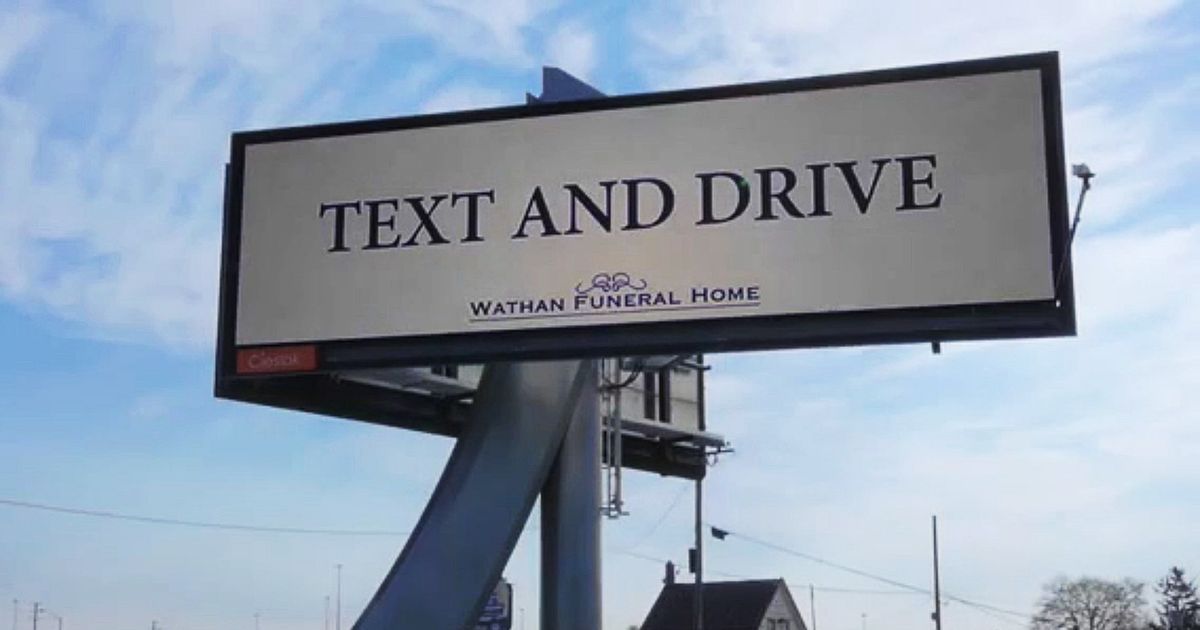
Social Media is a lot like a billboard. It's big, obnoxious, and potentially dangerous.

Marketing is a bit like knocking door-to-door on people's digital doorstep. You'll have a door slammed in your face most of the time, but occasionally someone will leave it open. This is good, and it's far superior to just letting things collect dust in your portfolio. Advertisement is how people accumulate viewers. It'll probably be slow and, in some cases, costly, but it's also full of potential. You've gone from getting 0 new subscribers to potentially 1 or 2. That's progress, and progress is good.

Some Last Thoughts


I can't keep writing this forever. I know I could, but that'd just mean it would float around in my drafts for a million years, and that's precisely what this post is arguing against. So what's my point with this? Why even write it in the first place?

To be honest with you, I have no idea. I just felt like I needed to write it, so I did. 

That's another point I've argued here, I suppose. It's pretty standard (at least in my circles) that you'll heed some advice from others which boils down to "don't think about writing, just write." 

It's decent advice, but I feel like it's missing something. I'm guilty of giving this kind of advice. I don't really think it's thoroughly good, so let me use this opportunity to correct  course a bit.

You should think about your writing. In the same way, you probably shouldn't try pantsing your way through an entire novel, don't just turn your brain off and write nonsense. You should consider what makes an idea exciting or, at the very least, what makes it special to you. Instead of framing it as just writing without a thought in the world, write what you want to write. Talk about what you love, hate, or just think is cool. Don't be afraid to write blog after blog about the passage of migratory bird patterns or the metaphysical implications of a four-dimensional fart. Because that's you. And that's cool.

Fear that nobody will be interested is worse than nobody actually being interested. It's pulling the plug before conception. I don't know everything I want to know. Hell, I don't even know what I want to know yet. But I'm changing and learning and just as excited to explore as I am to create. I know it'll be far from perfect, and I'm certainly aware that I might just be writing into the void. But that's okay.

Because when the sun does explode, I will take satisfaction in the fact that, out of a gazillion works of art on the internet, mine too will be destroyed. 

I did it.